This section will help you understand where to apply and how to use or relate the digitized data of the EPDs DAPcons® in your projects.
The environmental information contained in the EPDs DAPcons® is digitized using the standardized ILCD format (International Life Cycle Data system), an initiative developed by the JRC(Joint Research Centre – European Comission) and the DG-ENV (Directorate General for Environment) since 2005, with the aim of providing guidance and standards to achieve greater coherence and quality assurance in the implementation of LCA (Life Cycle Assessment). This format allows its practical application in construction projects, guaranteeing its compatibility with the main certification, analysis and modelling programmes in the sustainable building sector.
DAPcons® integrated into Environmental Calculation and LCA software
Our Environmental Product Declarations DAPcons® can be incorporated directly into widely used measurement programs and life cycle analysis tools, such as:
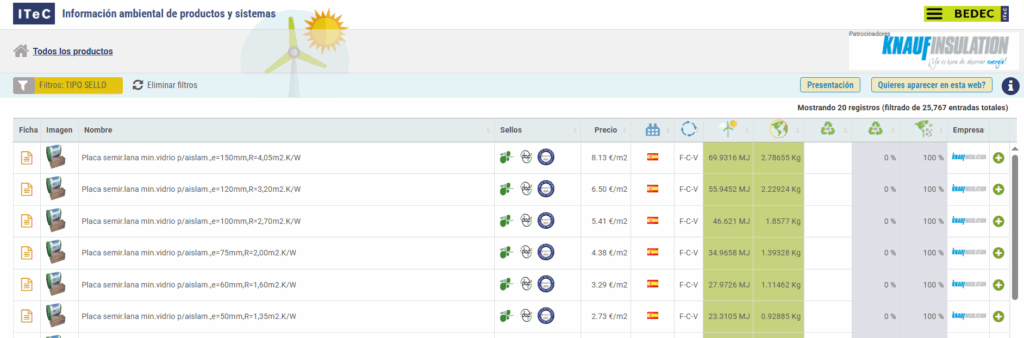
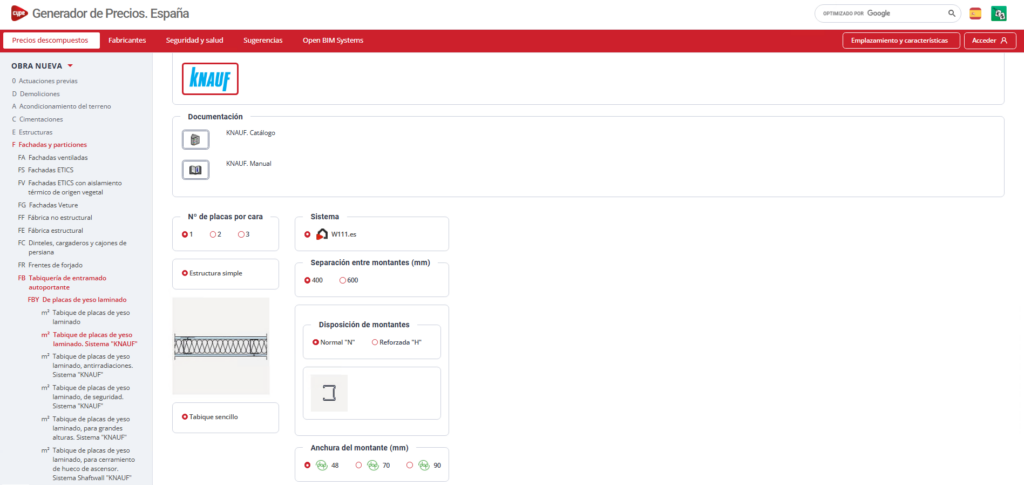
- ITEC, BDC IVE, CYPE, etc.: integration of environmental data in projects and in sustainability calculations.
- One Click LCA: import of EPDs for the assessment of life cycle impacts of buildings and infrastructures.
- Other LCA/LCA platforms support standard DAP formats (EN 15804, ISO 14025).
This integration ensures greater speed, accuracy and traceability in the use of verified environmental data. Some examples of integration into measurement programs and LCA tools:
Programs for the integration of environmental data bases in projects estimating and measurements
LCA calculation programs and environmental database management
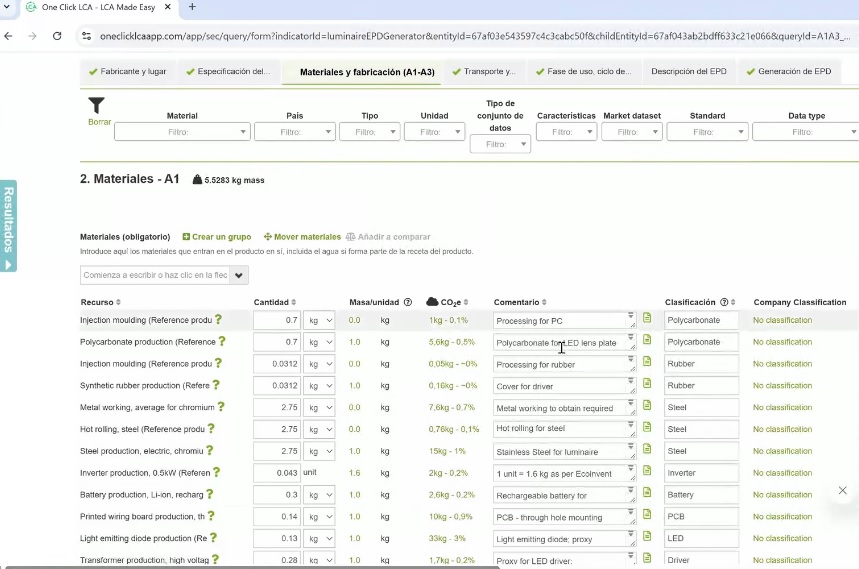
Incorporation of EPDs DAPcons® in projects and environmental specification for construction products
EPDs DAPcons® are key tools that enable architects, engineering and project management companies to:
- Select products with reliable and verified environmental information.
- Justify the reduction of environmental impacts from the design phases.
- Document sustainability criteria in specifications and technical reports.
- Monitor environmental compliance during the execution of the project.
They can be easily downloaded and incorporated as technical annexes into any project documentation.
Compatibility with building environmental certification systems
EPDs DAPcons® contribute directly to obtaining credits on the main sustainability building labels:
- LEED:® Materials and Resources (MR) category — recognition of verified Type III EPDs.
- GREEN:® calculation of the environmental profile of the building and the impact of the products used.
- BREEAM:® Mat 01 and Mat 02 categories, which value the use of verifiable LCA data.
Thanks to the methodological rigor and international recognition of EPDs®, projects can demonstrate their commitment to sustainability in a clear and measurable way.
Integration in BIM (Building Information Modeling)
EPDs DAPcons® can be linked to BIM (Building Information Modeling) objects, facilitating:
- The traceability of environmental information throughout the construction process.
- The generation of automatic environmental impact reports from the digital model.
- Multidisciplinary coordination based on consistent environmental information.
This allows for sustainable project management from design to construction and the use phase of the building.
Calculation and integration of EPDs at building and infrastructure level
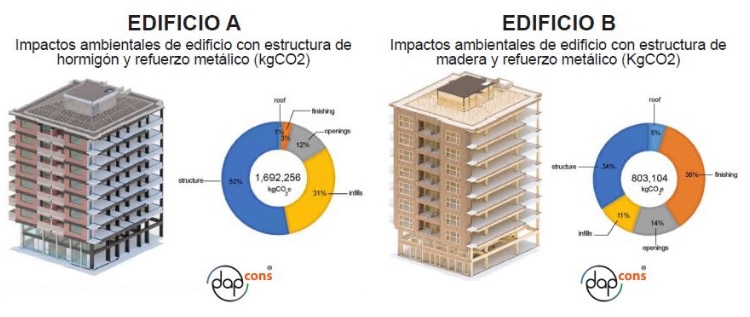
Verified EPDs for all materials involved in a project allow, using LCA and environmental modelling tools, to calculate the environmental impact of the entire building/infrastructure in an aggregated manner. By adding up the individual data of each product/material — energy consumption, emissions, resources consumed, waste, carbon footprint, etc. — it is possible to obtain global indicators of the building (impact in the construction, use, maintenance or end-of-life phase). This vision facilitates the comparison between construction alternatives, sustainable design decision-making and environmental documentation in reports, specifications or certifications.
If the project has a BIM model, the EPDs can be linked to the corresponding BIM objects, which facilitates the environmental traceability of the building from its components to its entirety, automating the generation of impact reports.
Integration of the Building Materials Passport and tools for the justification of circularity
The Building Materials Passport complements the EPD, providing information on the origin, composition, durability, recyclability or reuse of the material, as well as its environmental footprint. Their use, together with verified EPDs, provides a complete view of the life cycle: from manufacturing to possible reuse or recycling.
This allows the building to be evaluated not only for its initial environmental impact, but also for its potential for circular economy and valorization of materials at the end of their useful life.
Promoting the inclusion of the Digital Materials Passport in projects — especially if verified EPDs are available — reinforces transparency, traceability, and circularity.
The Material Passport (Building Material Passport) is designed as an identification document that exhaustively details the characteristics and value of the materials used in construction. Through this system, the identity of each material is documented, including its origin, composition, possible previous uses, current location, and its potential to be reused or recycled. This approach facilitates the transition from a linear to a circular economic model, where materials are kept in use for as long as possible, thus reducing the demand for new resource extraction and waste generation. The digitized information of the EPD DAPcons® can be incorporated into the materials passport to assess the environmental impact of the building and to be able to have the information.
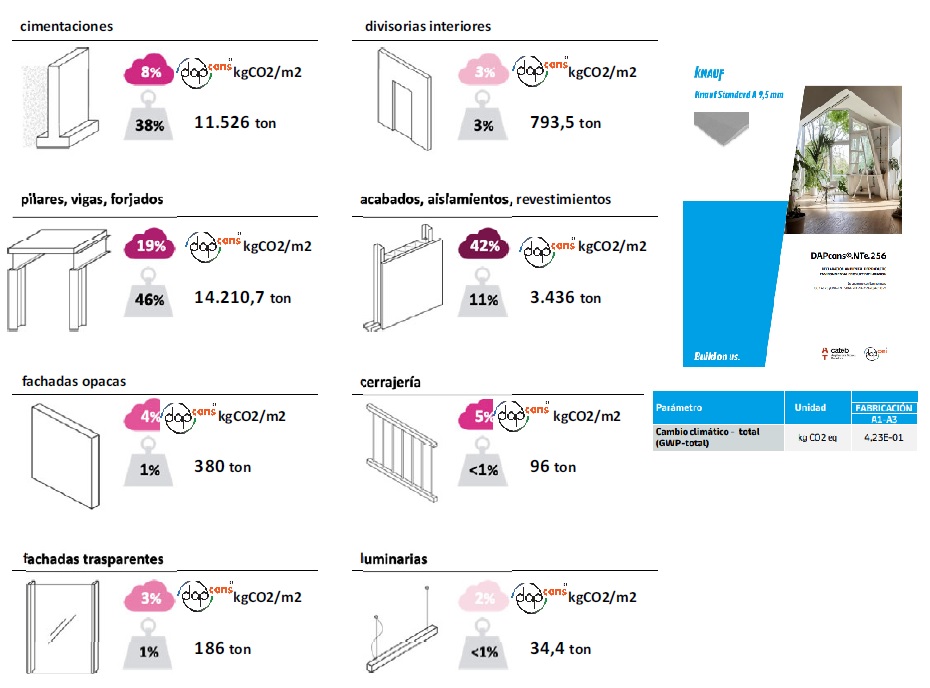
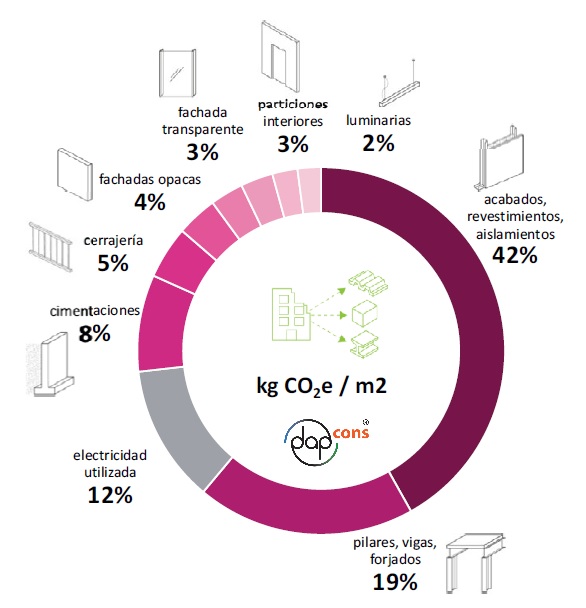
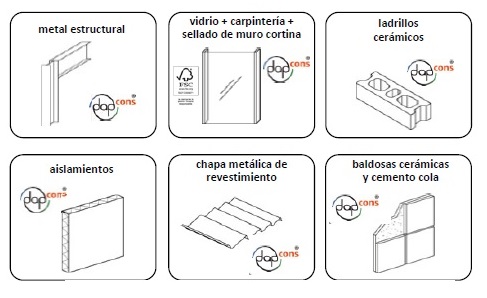
Images taken from the Slow Building Barcelona project. Building Passport. H.A.U.S. Healthy Buildings S.L.https://www.slowbuildingbarcelona.com/homepage/#contacto
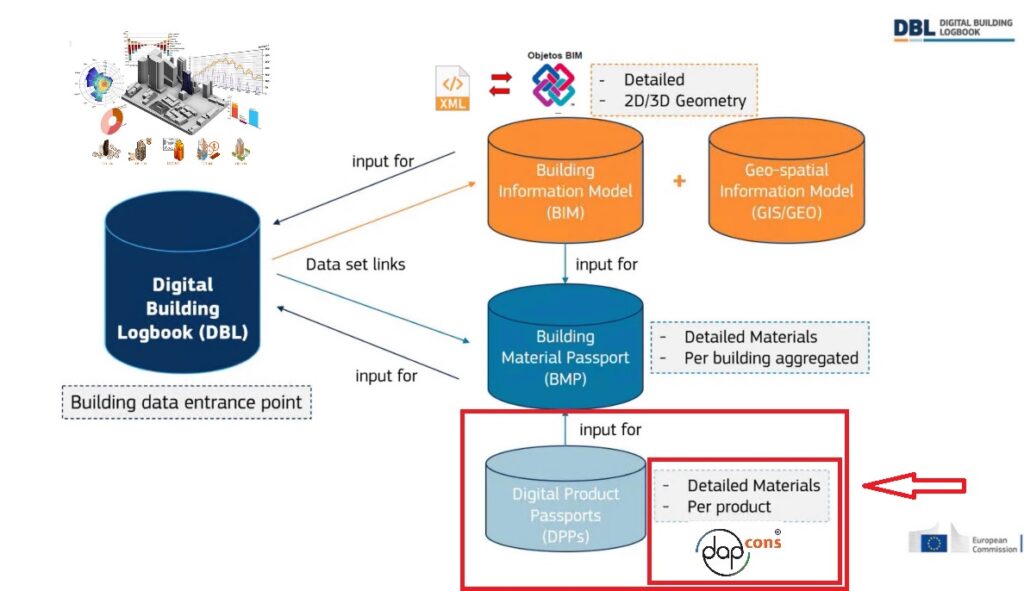
Digital Building Logbook (DBL) – Digital Product Passport (DPP)
DBL is a complete digital “Log” that collects and organizes all the relevant information of a building throughout its life cycle: design, construction, operation, maintenance, renovation and demolition.
This registry allows the interoperability of BIM (Building Information Modeling), BMP (Building Material Passport) data which, as mentioned in the previous section, integrates digital environmental information data contained in the EPD DAPcons® and obtained from the LCA – DPP (Digital Product Passport) calculation methodology.